
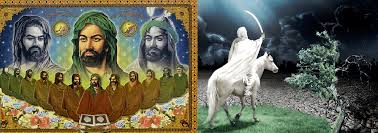
Islamic traditions describe a coming messianic figure known as the Mahdi, or “guided one,” whose prophesied actions and role bear striking parallels to the biblical descriptions of the Antichrist in the book of Revelation and other New Testament passages. The Christian Scriptures were composed in the 1st century AD, centuries before the Quran emerged in the 7th century AD.
The Name “Allah” and Its Origins
Some claim the name “Allah” appears in the Christian Bible, but it does not occur in either the Old or New Testament. The closest Hebrew terms are “Elah,” meaning “oak” or “curse,” and “Alah,” meaning “to ascend” or “climb”—neither of which refers to the God of the Bible. (The idea of ascending above God echoes the ambition of the Antichrist in Scripture.) In Aramaic, related terms carry different connotations, but in Islamic usage, “Allah” functions more as a title meaning “the god” rather than a personal name. This is similar to how various pagan cultures use generic terms for their chief deity, such as “the god.” Pre-Islamic Arabia featured widespread polytheism, including worship of spirits known as jinn (mentioned in both the Quran and earlier literature), and Allah was one among many deities revered in Mecca. Muhammad emphasized monotheism by identifying Allah as the sole God, but critics argue this represents a re-packaging of earlier polytheistic elements. In essence, Islam does not worship the same God as revealed in Christianity.
The Rebuilt Temple and Muslim Expectations
Prophecy indicates that during the first half of the Tribulation period, a third Jewish temple will be rebuilt in Jerusalem. This sets the stage for the Antichrist to enter it and commit the “abomination of desolation” (Matthew 24:15; Daniel 9:27), marking the midpoint when he fully reveals himself as the Beast. Given longstanding Muslim opposition to Jewish control of the Temple Mount, why might this rebuilding be permitted? Many believe it will occur because the emerging world leader—the Antichrist—will be perceived by Muslims as their long-awaited 12th Imam (Muhammad al-Mahdi), a figure currently in occultation (hiding) and poised to return.
Who Is the Mahdi?
The Mahdi is viewed as the spiritual and political successor to Muhammad. In Arabic, “Mahdi” means “guided one.” Islamic tradition, drawn primarily from hadith (collections of Muhammad’s sayings, actions, and approvals transmitted through chains of narrators), portrays him as a messianic deliverer who will usher in justice, revive true Islam, and lead a seven-year golden age of peace and prosperity before the world’s end. Hadith are foundational to Islamic culture, providing much of Sharia law (Islamic jurisprudence) and moral guidance—often ranking second only to the Quran itself. The Mahdi is expected to establish Allah’s kingdom on earth, enforcing Islam globally.
Parallels Between the Mahdi and the Biblical Antichrist
The characteristics attributed to the Mahdi in hadith align closely with John’s descriptions of the Antichrist (e.g., Revelation 13). Key similarities include:
- He will establish a seven-year peace treaty with the Jews.
- He will break the treaty after 3½ years.
- He will appear riding a white horse, presenting himself as a peacemaker.
- He will demand and receive worship.
- He will execute those who refuse to worship him.
- He will be adored by the masses (those conformed to the world system).
- He will distribute vast wealth.
- He will ultimately defeat the figure Muslims call the Dajjal (whom they identify as the Christian Jesus) at the end.
In Islamic eschatology, the Dajjal is an evil deceiver claiming to be the Messiah arriving just before Judgment Day (described in hadith, though not the Quran). Thus, from a biblical viewpoint, the Mahdi corresponds to the Antichrist, while the Islamic Jesus functions like the false prophet of Revelation. Muslims anticipate the Mahdi establishing his capital in Syria, which finds echoes in biblical prophecy.
The Kings of the North and South in Daniel
The book of Daniel provides detailed insight into end-times events, filling gaps in Revelation. Historically, it described conflicts between the “king of the South” (Ptolemies of Egypt) and the “king of the North” (Seleucids of Syria), with Israel caught in between. Prophetically, it previews the Antichrist’s actions during the final 3½ years of the Tribulation.
Daniel 11:36-45:
“Then the king will do as he pleases, and he will exalt and magnify himself above every god and will speak monstrous things against the God of gods; and he will prosper until the indignation is finished, for that which is decreed will be done. He will show no regard for the gods of his fathers or for the desire of women, nor will he show regard for any other god; for he will magnify himself above them all. But instead, he will honor a god of fortresses, a god whom his fathers did not know; he will honor him with gold, silver, costly stones and treasures. He will take action against the strongest of fortresses with the help of a foreign god; he will give great honor to those who acknowledge him and will cause them to rule over the many and will parcel out land for a price.”
“At the end time the king of the South will collide with him, and the king of the North will storm against him with chariots, with horsemen and with many ships; and he will enter countries, overflow them and pass through. He will also enter the Beautiful Land, and many countries will fall; but these will be rescued out of his hand: Edom, Moab and the foremost of the sons of Ammon. Then he will stretch out his hand against other countries, and the land of Egypt will not escape. But he will gain control over the hidden treasures of gold and silver and over all the precious things of Egypt; and Libyans and Ethiopians will follow at his heels. But rumors from the East and from the North will disturb him, and he will go forth with great wrath to destroy and annihilate many. He will pitch the tents of his royal pavilion between the seas and the beautiful Holy Mountain; yet he will come to his end, and no one will help him.”
This passage depicts the Antichrist (called “the king”) exalting himself as God, blaspheming the true God, and honoring a “god of fortresses” (possibly military power or an image of the Beast). The phrase “no regard… for the desire of women” likely means disregarding deities favored in certain cultures, not implying personal orientation—he elevates himself above all gods. He conquers with Satan’s aid (“foreign god”), rewarding loyalists with land and rule.
The Midpoint Shift and Satan’s Wrath
During the first half of the Tribulation, the Antichrist appears as a peacemaker (the rider on the white horse in Revelation 6). At the midpoint, Satan is cast from heaven (Revelation 12), possesses the Antichrist fully, and unleashes fury on Jews and new believers in Christ. He conquers nations until the time of wrath ends at Armageddon.
Israelites in Judea are urged to flee to the mountains (Matthew 24:15-21). Revelation 12 describes “the woman” (symbolizing Israel) fleeing to a prepared place for 3½ years (“time, times, and half a time”). Some scholars point to Petra in ancient Edom (modern Jordan) as this refuge—Edom, Moab, and Ammon escape the Antichrist’s full grasp, possibly sheltering fleeing Jews. He invades Egypt, Libya, Sudan (Ethiopia/Cush), and seizes their wealth. Alarms from the east and north (possibly linked to kings from the east in Revelation 16:12-14) provoke his rage.
Revelation 16:12-14:
“The sixth angel poured out his bowl on the great river, the Euphrates; and its water was dried up, so that the way would be prepared for the kings from the east. And I saw coming out of the mouth of the dragon and out of the mouth of the beast and out of the mouth of the false prophet, three unclean spirits like frogs; for they are spirits of demons, performing signs, which go out to the kings of the whole world, to gather them together for the war of the great day of God, the Almighty.” He gathers global armies against Christ but meets defeat at Armageddon. Satan is bound for 1,000 years, while the Antichrist and false prophet are cast into the lake of fire eternally.
The Assyrian Connection and Regional Origins
Daniel identifies the Antichrist as the “king of the North” (Syria region). Scripture also calls him “the Assyrian.”
Isaiah 10:12:
“So it will be that when the Lord has completed all His work on Mount Zion and on Jerusalem, He will say, ‘I will punish the fruit of the arrogant heart of the king of Assyria and the pomp of his haughtiness.’”
This punishment follows Christ’s victory at Armageddon, as seen in Revelation 14:1: “Then I looked, and behold, the Lamb was standing on Mount Zion, and with Him one hundred and forty-four thousand, having His name and the name of His Father written on their foreheads.”
Ancient Assyria encompassed parts of modern southern Turkey, eastern Syria, northern Iraq, and western Iran—suggesting the Antichrist’s origins or base in this broader region.
In many Muslim-majority nations today, Christians faithful to the Bible face severe persecution and even death, underscoring ongoing tensions between these worldviews.
If you found this article to be interesting, please download our book completely FREE! “The Big Story: According to the Bible” gives a complete storyline of future events leading up the Second Coming of Christ based on the Book of Revelation.
Are you ready for the End of the World, World War 3, and the Antichrist? The future has been written. Everything has been foretold. There are no secrets. Learn what your future has in-store for you today.
Learn about:
1. Who is the Antichrist?
2. Who is the Whore of Babylon? (hint: it’s not Rome)
3. When will World War 3 start?
4. And much…much more.
There are many stories in the Bible that teach a spiritual lesson. However, there is one big story that needs to be taught that starts with the Book of Genesis and ends with the Book of Revelation. This story is about the fall and restoration of God’s creation on earth. It describes why we are where we are today and what the future has in-store for us.
The Big Story focuses on future prophecies. Those prophecies which are found in the Book of Revelation. Revelation is a prophetic book based on the end times. As “the Revelation of Jesus Christ,” this book is sometimes called the Apocalypse, which in Greek means a revelation, uncovering, or unveiling of that which is hidden.
Free Download at: